Content is published consistently, engagement looks healthy, traffic keeps growing yet leads remain scarce. When this happens, the issue is rarely “lack of content,” but the lack of a clear journey:
TOFU MOFU BOFU helps you map how audiences move from first awareness to purchase-readiness, including the meaning of each stage, content examples, key KPIs, and common mistakes that often cause funnel leaks.
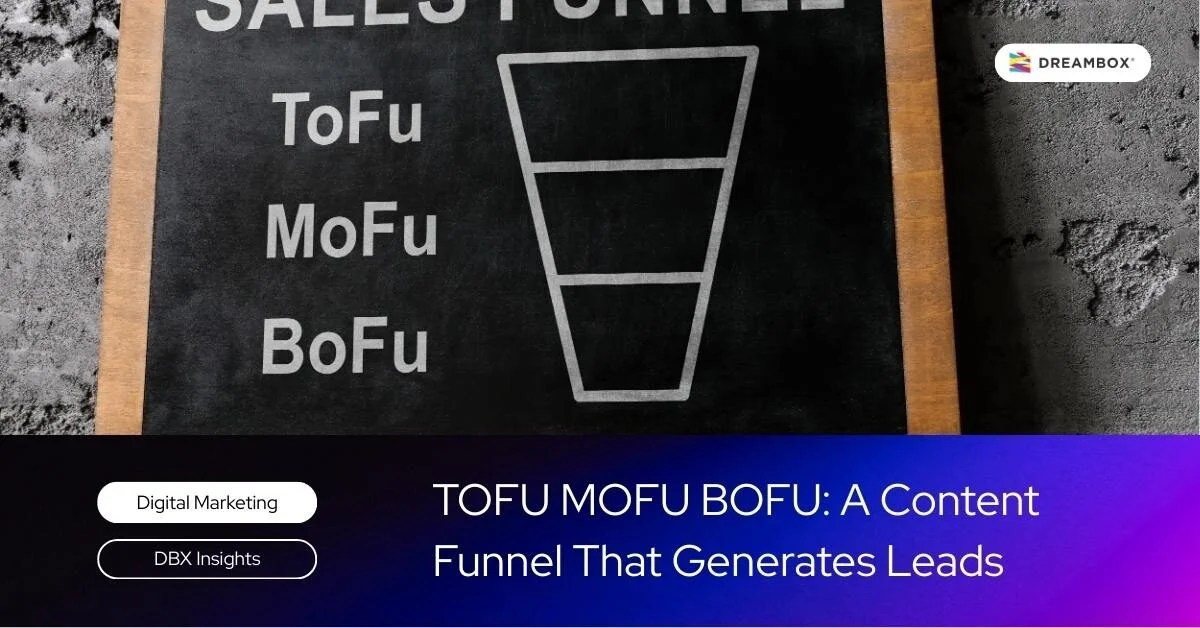
Understanding TOFU MOFU BOFU in the Marketing Funnel
The Meaning and Goal of Each Stage
TOFU (Top of Funnel) is designed to reach people who are just realizing they have a problem or are beginning to explore a topic. The goal is to build awareness and attract attention not to push an immediate sale.
MOFU (Middle of Funnel) supports audiences who are actively researching and evaluating possible solutions. They may not be ready to compare vendors yet, but they want clarity, frameworks, and evidence that a certain approach works.
BOFU (Bottom of Funnel) is where decision-making happens. The audience typically knows their options and starts assessing which product or vendor fits best and feels safest to choose.
Schedule a free 30-minute branding consultation session with our experts.
How It Connects to Awareness–Consideration–Decision
TOFU aligns with Awareness (recognizing the issue), MOFU supports Consideration (evaluating approaches and options), and BOFU reinforces Decision (choosing and taking action).
This structure reflects real buying behavior: most people don’t see one post and instantly buy especially in B2B or high-value services.
Why Funnels Strengthen Your SEO and Ads Strategy
A funnel makes both SEO and ads more strategic because it organizes content around search intent:
- TOFU: informational intent (people looking for answers)
- MOFU: investigative intent (people comparing approaches)
- BOFU: transactional intent (people ready to talk, book, or buy)
For ads, the funnel helps you segment audiences properly TOFU for cold audiences, MOFU for retargeting those who engaged, and BOFU for high-intent visitors (service pages, contact pages, form visitors).
For content planning, it also helps you “qualify” leads: not all traffic should be pushed to convert immediately many need education and nurturing first.
Audience Signals at Each Funnel Stage
TOFU audiences usually come with broad questions such as:
- “Why is website traffic up but conversions down?”
- “Why is it hard to generate B2B leads?”
- “How do I build a consistent content system?”
They’re not searching for a vendor yet they’re searching for understanding. If your content sells too aggressively here, they’ll often leave.
MOFU: Comparing Solutions
At MOFU, the questions become more specific:
- “SEO vs Google Ads what delivers results faster?”
- “Do I need brand strategy before running ads?”
- “What’s the difference between a full-service agency and a specialist?”
This is where audiences want validation: frameworks, proven methodologies, checklists, and a transparent process.
BOFU: Ready to Choose a Vendor or Product
BOFU audiences are already narrowing down options:
- “We need an audit can we meet this week?”
- “Do you have case studies in our industry?”
- “What’s your process and timeline?”
Here, audiences want evidence, clarity, and a frictionless next step.
TOFU Content Strategy (Top of Funnel)
Focus: Education and Traffic Growth
TOFU works best for expanding reach with problem-aware topics. The key is to be sharp about the pain point, keep it practical, and make readers think, “This is exactly what I’m dealing with.”
Common TOFU KPIs:
- Organic sessions / clicks
- Impressions & CTR (Google Search Console)
- Reach, engagement rate, video views (social)
- New users, time on page, scroll depth (analytics)
Formats: SEO Articles, Short Videos, Carousels
TOFU formats should be easy to consume:
- SEO articles: “How to structure a content funnel for lead generation”
- Short-form video: quick tips, myth-busting, 30–60 seconds
- Carousels: step-by-step breakdowns or mini checklists
At this stage, prioritize informational and problem-driven keywords—not service keywords.
CTA: Soft CTAs to Newsletter or Checklist
TOFU CTAs should feel light and low-commitment:
- Subscribe to a newsletter
- Download a checklist
- Save the post / follow the account
- Read the next related article (internal linking)
The purpose is to convert anonymous traffic into audiences you can nurture.
MOFU Content Strategy (Middle of Funnel)
Focus: Build Trust and Validate the Solution
MOFU is the most important stage for building credibility. This is where you can explain:
- your strategic approach and frameworks,
- what really matters in execution,
- trade-offs between options,
- common mistakes and how to avoid them.
At MOFU, audiences want to know you understand the context—not just that you “offer a service.”
Relevant MOFU KPIs:
- Lead magnet download rate
- Webinar registration & attendance rate
- Email open rate & click-through rate
- MQL (Marketing Qualified Lead), CPL (Cost per Lead)
Formats: Guides, Webinars, Email Nurture
MOFU content usually performs best when it goes deeper:
- Guides: “A 30-day playbook to turn traffic into qualified leads”
- Webinars: case breakdowns, live walkthroughs, Q&A sessions
- Email nurture: 3–7 email sequences that become progressively more specific
SmartBug also highlights that MOFU audiences are researching how to solve their problem—so nurturing content often outperforms hard selling here.
CTA: Download, Register, or Book an Initial Consultation
MOFU CTAs can be more direct while staying helpful:
- Download the full guide
- Register for a webinar
- Book an initial consultation (discovery call)
- Request a light audit or assessment
BOFU Content Strategy (Bottom of Funnel)
Focus: Support Decision-Making
BOFU is not just about “selling”—it’s about making decisions easy. Share your process, deliverables, timelines, and what makes your approach different. BOFU audiences often compare multiple vendors, so clarity and transparency matter.
Common BOFU KPIs:
- Demo/meeting booked rate
- Form submission rate
- SQL (Sales Qualified Lead)
- Proposal-to-close rate
- Influenced pipeline value
Formats: Case Studies, Demos, Testimonials, Proposals
High-performing BOFU assets include:
- Case studies: context, strategy, execution, results, lessons learned
- Demos: process walkthrough, platform/tool explanation
- Testimonials: specific outcomes, not generic praise
- Proposal decks / one-pagers: concise and clearly structured
SmartBug gives examples of BOFU content like case studies, vendor comparisons, live demos, trials, and consultations because audiences are ready to move forward.
CTA: Meeting, Audit, or Offer
At BOFU, your CTA should be clear and frictionless:
- Schedule a meeting
- Request an audit or evaluation
- Ask for a proposal/offer
Common mistakes that cause “busy content, quiet leads”:
- Hard selling too early in TOFU, when the audience is still learning.
- Skipping MOFU, leaving audiences without proof and confidence before deciding.
- Using the same CTA everywhere, pushing “Contact us” even when people aren’t ready.
- Mismatch between topic and intent, such as targeting informational keywords but sending users to sales-heavy pages.
- Tracking vanity metrics only, without identifying which funnel stage is leaking.
Summary and Next Steps
In short, TOFU MOFU BOFU turns content into a system: TOFU drives discovery, MOFU builds trust, and BOFU supports decisions so you’re not simply “posting regularly and hoping for leads.” When the flow is aligned, SEO, ads, and nurturing work together, and lead quality typically improves.
If you’d like to implement this funnel with a clearer strategy, explore Dreambox’s Digital Marketing services or strengthen your foundation through Branding Strategy. To discuss what makes the most sense for your business goals, reach out to the Dreambox team via our contact page and for more relevant insights, visit DBX Insight.